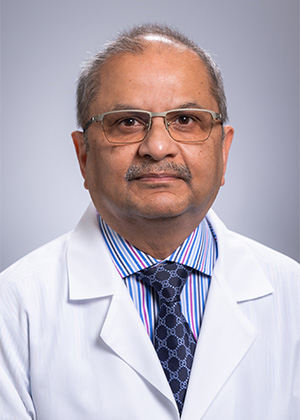
Dr. Basu is the S. Richardson Hill Jr. Endowed Professor of Endocrinology in the University of Alabama at Birmingham’s Heersink School of Medicine and holds a joint appointment in the Department of Nutrition Sciences in the UAB School of Health Professions. He obtained his MD degree in India in 1986 after completing his residency. Thereafter, he moved to the United Kingdom, where he completed his fellowship training in endocrinology and received his MRCP degree in 1988. Dr. Basu then moved to the U.S. to pursue a research fellowship in the Division of Endocrinology at Mayo Clinic in Rochester, Minnesota, followed by an internal medicine residency and an endocrine fellowship. In 2000, he joined the Mayo Clinic faculty and rose through the academic ranks to become a full professor of medicine in 2011 and a clinical investigator in 2015. In 2017, Dr. Basu moved to the University of Virginia in Charlottesville, Virginia, as the Harrison Professor of Medicine. He joined UAB in 2023 and assumed the role of PI/PD of the NIDDK-funded P30 Diabetes Research Center in 2025.
Dr. Basu has achieved international recognition in the use of state-of-the-art integrated physiology methods (namely, tracer dilution techniques) in understanding whole-body and regional carbohydrate, substrate, and hormone metabolism in humans with and without both type 1 and type 2 diabetes. He helped develop the triple tracer technique to accurately estimate components of carbohydrate metabolism and pancreatic beta cell function – both insulin secretion and insulin action – after a mixed meal. This work represents the epitome of team science. Collaborating closely with his wife, Dr. Rita Basu, and bio-engineering modelers from the University of Padova, Italy, he helped establish the Type 1 Diabetes Simulator, the first of its kind endorsed by the U.S. Food & Drug Administration, in 2008. The simulator was designed to replace costly and time-consuming pre-clinical animal studies with direct testing of control algorithms in humans prior to approval of automated insulin delivery systems for type 1 diabetes.
Dr. Basu’s continuing investigations into carbohydrate physiology in type 1 diabetes have helped update the Type 1 Diabetes Simulator with additional data on multiple parameters including diurnal variability of insulin action, dawn phenomenon, hepatic glucagon sensitivity, etc. His investigations have also produced noteworthy information on the effects of exercise in type 1 diabetes and the close interactions between glucose and lactate metabolisms during exercise. His recent pioneering work applying novel state-of-the-art glucagon tracer methods has defined, for the first time in humans, whole-body and regional glucagon metabolism in type 1 diabetes, both during fasting and post-meal conditions. This innovative tool designed to directly probe pancreatic alpha cell function – namely, glucagon secretion and extraction – holds great promise for expanding our understanding of the effects of the newer therapies that are being developed to manage obesity and type 2 diabetes.
Dr. Basu’s clinical achievements are numerous. At Mayo Clinic, he founded the Cardio-Metabolic Clinic to target management of metabolic risk factors for primary and secondary prevention of cardiovascular disease in those with the putative metabolic syndrome. He also oversaw the LDL apheresis unit – the only one of its kind in the upper Midwest. Dr. Basu co-founded the Transplant Endocrine Clinic and the Diabetes Technology Clinic at Mayo Rochester. He successfully led the Hospital Diabetes Oversight Group that oversaw management of all patients with hyperglycemia at Mayo Rochester Hospitals. He helped develop protocolized care for hyperglycemic patients in both intensive care and medical-surgical units. He was also instrumental in growing the diabetes service into a financially favorable venture that met and exceeded the numerous quality and safety metrics established for hyperglycemia management in hospitalized patients.
Dr. Basu established the Diabetes Technology Clinic at UVA and also here at UAB. In 2024, he led the petition to the Alabama Medicaid Commissioner to pay for coverage of continuous glucose monitors and insulin pumps for >8,000 Medicaid recipients with type 1 diabetes in Alabama. His efforts bore fruit when Alabama Medicaid approved coverage of continuous glucose sensors in October of 2025. Dr. Basu plans to continue to work with the State of Alabama to expand coverage of insulin pumps for Medicaid recipients with type 1 diabetes.