Explore UAB

epilepsy image

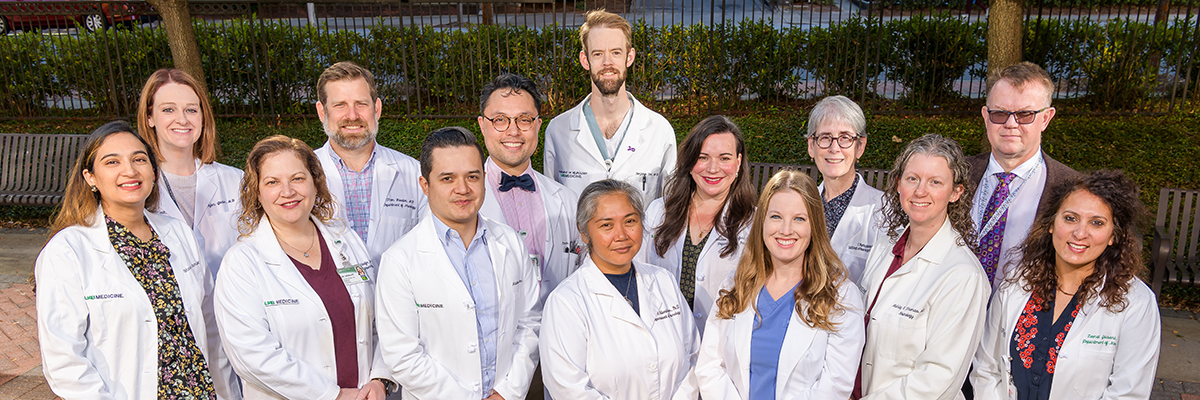
Established in 1985, the UAB Epilepsy Center is a joint effort of the Department of Neurology and UAB Hospital to provide clinical, research, and educational services to patients with epilepsy. Located in the Chauncey-Sparks Center, we are one of the largest and most active centers in the country and only one of two Level 4 National Association of Epilepsy Centers (NAEC) in Alabama.

NAEC Level 4 Epilepsy CenterAs a Level 4 Center, the highest level recognized by the NAEC, we have the capability to diagnose and treat epilepsy using the latest medical and surgical techniques available anywhere in the world. Learn more about what it means to be a NAEC center.

In addition to daily outpatient epilepsy clinics, faculty have developed subspecialty areas of interest that include Tuberous Sclerosis Complex (TSC), epilepsy genetics, women in epilepsy, a transition clinic for adolescents who are seeking adult care, a neuromodulation clinic for patients with various devices that are being used for the treatment of their epilepsy, and a concussion and post-traumatic epilepsy clinic. For patients with non-epileptic seizures, UAB providers have developed an interdisciplinary functional neurological disorders program. A brief description of some of these offerings is available below:

  • The UAB Tuberous Sclerosis Complex (TSC) Clinic is a designated TSC Center of Excellence providing comprehensive, multidisciplinary care for children and adults with TSC. This subspecialty clinic coordinates lifelong care and surveillance for this complex multisystem disorder. As the largest TSC program in the Southeast, we offer comprehensive epilepsy care, including evaluation for epilepsy surgery. Our mission is to deliver expert, patient-centered care while advancing the understanding and treatment of TSC across the lifespan.

  • The Women with Epilepsy Clinic addresses specific concerns related to women living with epilepsy. This clinic focuses on family planning, managing seizures during pregnancy, post-partum care, breastfeeding, bone health, and post-menopausal seizure-related issues.

  • The Transitional Care Clinic supports planned movement of adolescents with chronic medical conditions from child-centered to adult-oriented health-care systems. For patients with epilepsy, transition to adulthood can provoke significant anxiety. Many have endured the diagnostic evaluation, turbulence of their disease, a barrage of treatments, and potentially operative management with the same pediatric neurology provider. Moving on from this steadfast provider can seem daunting.

  • The Concussion and Post-Traumatic Clinic offers specialized clinic care dedicated to the diagnosis and management of post-traumatic epilepsy and complex post-concussion syndromes. The clinic provides comprehensive, multidisciplinary care tailored to patients with persistent neurological symptoms following head injuries.

  • UAB Medicine’s Interdisciplinary Functional Neurological Disorder (FND) Treatment Program provides comprehensive care for adults and children with FNDs, including non-epileptic (functional) seizures, a condition that affects communication between the brain and body. Following diagnosis, patients receive an individualized treatment plan that includes psychological treatment in addition to treatment of physical, occupational, and speech problems, which is delivered by a collaborative interdisciplinary team.

  • In the Neuromodulation Clinic, we offer FDA-approved implantable neuromodulating devices such as VNS (vagal nerve stimulation), DBS (deep brain stimulation), and RNS (responsive neurostimulation) to treat seizures in patients not responding to conventional anti-epileptic medications. Our team of neurosurgeons implants the device, after which patients are closely monitored in our dedicated Neuromodulation Clinic for device management.

Our state-of-the-art facilities and equipment are available for diagnostic studies and treatment. Intracranial electrode implantation, cortical stimulation studies, specialized EEG procedures, and a full range of conventional and special tests are available. The magnetoencephalography (MEG) laboratory, one of the very few across the country and the leading referral center for the Southeast, is part of the Epilepsy Center. MEG provides a more accurate way to locate the origin of seizures and is also used to identify brain areas responsible for speech, sensation, and vision. This makes surgery safer and more effective.

The UAB Epilepsy Surgery program is supported by a comprehensive team of fellowship-trained functional neurosurgeons. Together, this team offers the full range of surgical treatments for medically refractory epilepsy, including stereotactic EEG, radiofrequency lesioning, resective surgery, laser interstitial thermal therapy, responsive neurostimulation, vagus nerve stimulation, and deep brain stimulation. Neurosurgery plays an integral role in the evaluation and treatment of patients with epilepsy, working closely with UAB Neurology colleagues through the multidisciplinary epilepsy conference to carefully review each patient’s case and develop an individualized treatment plan. This collaborative approach supports comprehensive, high-level care for patients with complex epilepsy.


Education

There are two resident rotations at UAB with an emphasis on epilepsy/EEG. During this time, residents maintain primary responsibility for the inpatient Epilepsy Monitoring Unit, the Long-Term EEG Monitoring service, in addition to seeing patients in faculty clinics.

UAB Neurology residents have required four-week rotations on the EMU and LTM services in their PGY2 year, and an epilepsy outpatient rotation in their PGY4 year. There are also opportunities for further exposure to epilepsy, including tailored epilepsy electives aligned with their interests and research projects with faculty. Our division also offers a special topics week, “Introduction to Epilepsy,” for medical students who have completed their pre-clinical Neuroscience module. This course provides basic education on EEG, management of status epilepticus, and inpatient/outpatient management of epilepsy.

Learn more about the Epilepsy Fellowship


Research

Research areas of interest include structural and functional neuroimaging, epilepsy surgery, neuromodulation and neurostimulation, EEG signal processing and source localization, device trials, and pharmacology with new anticonvulsant drugs. Neuroimaging research is carried out in magnetoencephalography, NMR spectroscopy, volumetrics, relaxometry, and new techniques such as water diffusion and blood flow MRI-based imaging. In addition, a growing research area of interest is the outcome of epilepsy surgery.

The Civitan International Neuroimaging Laboratory/Research MRI Core (CINL/RMRIC) provides state-of-the-art resources and services to the UAB community to conduct MRI research in health and disease. We work with faculty across multiple UAB departments and University-Wide Interdisciplinary Research Centers to facilitate high-quality MRI research studies.

Learn more about the Magnetoencephalography (MEG) Lab


Give

The support of visionary philanthropic partners provides the potential for major breakthroughs in treatment, training, and research. Your gift enables UAB to invest in key areas that will help us become a first-choice destination for education and healthcare.

Give Now Opens an external link.


Contact Us

General Questions About the Division

UAB Epilepsy Center
1719 6th Avenue South, CIRC 312
Birmingham, AL 35294
P: 205-934-3866
F: 205-975-6255

Patient Appointments

The Kirklin Clinic
P: 205-801-8986

Urgent Physician Referrals

P: 1-800-UAB-MIST (822-6478)

UAB Seizure/Epilepsy Monitoring Unit Referral

Print form and fax to 205-975-6360­

Social Media

X: @UABEpilepsy
Instagram: @UABepilepsy