When neuropsychologist Ronald Lazar, Ph.D., speaks to groups, he starts by asking for a show of hands.
“I’ll say, ‘How many people here know someone with dementia, or Alzheimer’s, or who has had a stroke?’” said Lazar, who is Evelyn F. McKnight Endowed Chair for Learning and Memory in Aging and director of the Evelyn F. McKnight Brain Institute at the UAB Heersink School of Medicine. “Everyone raises their hands. Then I mention the data. About 15 percent of people over 65 get dementia. That’s one in six, which is a lot of people; but not everyone gets it. And when they learn there is the possibility of doing something to change their risk, it’s a wake-up call.”
Neuropsychologists specialize in measuring cognition in disease and health. As a clinician at Columbia University Irving Medical Center in New York City, Lazar spent decades working with patients who had cognitive problems from just about any cause. “One conclusion I came to is that, once there is cognitive decline from disease and pathology, there is not much you can do,” Lazar said. “They will never be the same again.”
Despite advances in medicine, the incidence of hypertension, diabetes and dementia — interrelated diseases that are associated with cognitive decline — are all rising, Lazar notes. “By 2060, there will be a million new cases of dementia each year,” he said. “It’s a staggering thought. We have to do something about this.”
In the mid–2010s, as he was being recruited to UAB, “I came to the conclusion that prevention is the best response,” Lazar said. “And the best place to prevent this is primary care. That is the specialty with the longest-term relationship with patients.”
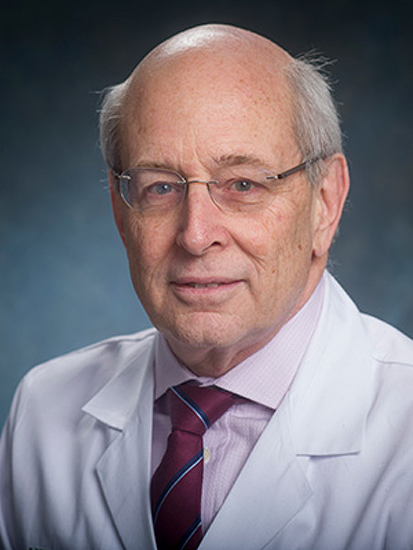 Neuropsychologist Ronald Lazar, Ph.D., director of UAB's Evelyn F. McKnight Brain Institute, says that everyone can lower their risk of cognitive issues as they age.In 2021, Lazar was lead author on a Scientific Statement from the American Heart Association and American Stroke Association, published in the journal Stroke, on the value of addressing factors associated with cognitive decline in primary care clinics.
The following year, Lazar launched the Brain Health Advocacy Mission, or BHAM, offering brain health checkups at two UAB family and community medicine clinics. (BHAM is now embedded in four primary care clinics at UAB.) “We are the first in the country to put brain health into primary care for primary prevention,” Lazar said. “We contacted patients in those clinics and said, ‘How about if we spend time discussing how you are protecting your brain after your appointment?’” Lazar said. “About half the people said they would do so.”
The initial pilot project consisted of 100 participants. There are now almost 170 participants in the BHAM Registry, which was launched in August 2023 and is recruiting “people from their 20s to their 70s, with the average age of 48,” to follow long-term, Lazar said. “We want to show that what you do in middle age has more to do with your health in old age than what you do in older age.”
So, what can you do to protect your brain as you age? Lazar highlights these key points:
1. We have an intervention that works
After their regular provider visits, BHAM participants take a questionnaire that gives them a Brain Care Score, ranging from 0 to 21, based on physical (including blood pressure, cholesterol, BMI), lifestyle (including alcohol and tobacco use and dietary habits) and social/emotional risk factors (including stress levels and social relationships). The higher the score, the lower the participant’s risk for dementia and stroke. “We tell them where they are doing good things and things they need to work on,” Lazar said. “Then we create individualized programs based on what they choose.” (See an example of the questions here.)
The Brain Care Score has been validated based on data on nearly 400,000 individuals enrolled in the U.K. Biobank population study. In a 2024 paper, Lazar and co-authors reported that a 5-point increase in Brain Care Score is associated with a 27 percent lower risk of stroke, depression and dementia.
“It’s an intervention that we know works and becomes the basis for interventions that we know are helpful,” Lazar said. “I have been talking to any group I can, trying to get this message out.”
2. Start where you are
“We aren’t asking people who have not exercised regularly to suddenly become marathon runners,” Lazar said. “We’re just saying, ‘Why don’t you walk around the block once?’ Then, after awhile, ‘Let’s try it twice.’ We try to build up success. One of the hallmarks of rehabilitation in the stroke world is to start with something people can do successfully. That builds confidence.”
3. Choice is important
One critical part of BHAM is that participants decide what they want to focus on. “We have taken the position that we want people to make their own choices,” Lazar said. “We are aiming to motivate them, rather than telling them what they should do.”
That could be getting more exercise, eating better, getting more sleep or working on stress. “All of them are important,” Lazar said. The majority of BHAM participants so far have chosen exercise or diet as targets, Lazar says, but about a quarter want to work on their stress levels. “We have learned how much stress there is here” in Alabama, Lazar said. “If people identify stress as one of their targets, we offer a consultation with a specialist in stress management.”
Learn more about the Brain Health Advocacy Mission, including how you can request an educational talk or invest in the program.