Current Postdocs
 OPE-sponsored awards include:
For additional information, please email
Career Enhancement Award (CEA)
Each fiscal year (October 1 to September 30) four (4) awards will be given to postdoctoral scholars to enhance their professional development.
These awards will pay up to a maximum amount of $1,500 toward allowable expenses such as internships (for up to a one month period) and attending extramural courses (e.g. NIH, Cold Spring Harbor, Woods Hole, etc) to learn new skills. Funds cannot be used to travel to scientific meetings. Previous CEA recipients are welcome to apply but should state in their application the date(s) of previous awards as well as the report of the activity.
Applicants must submit:
- an updated curriculum vitae
- a short description (no longer than two pages) of the educational activity as well as the potential benefits
- a letter from the mentor endorsing the activity
- a letter of invitation from the sponsoring event (if possible)
- a budget of anticipated expenses
All applications will be reviewed and ranked according to the following criteria:
- potential impact of the educational activity to your career development, and
- your research productivity during your postdoctoral training as judged by publications and presentations in national and international meetings.
Successful applicants will be notified in writing. All requests for reimbursement must be submitted within 30 days of the activity. See the expenditure guidelines at the UAB Financial Affairs website for a list of reimburseable items for employee or trainee travel and the appropriate procedures: Traveling - Financial Affairs. Airline tickets may be provided in advance by the UAB travel office.
Receipt of this award does not guarantee acceptance into the desired educational activity. Similarly, acceptance into a desired educational activity does not guarantee receipt of the CEA. Incomplete applications will not be reviewed.
Internship Award
Apply Here
For more information, contact the Postdoc Office at
In order to enhance career opportunities available to postdoctoral scholars at UAB, the OPE provides assistance to fund internships in industrial, administrative, or academic settings within UAB or the Birmingham area. We believe that helping to provide such opportunities will add to the development and training experiences of postdoctoral scholars as they define their independent career paths.
Award Description
- The OPE will fund one (1) award per year in the amount of $5,000 each to aid scholars in their performance of internships within or outside of UAB. Specifically, these funds will be used to purchase a percentage of a postdoctoral scholar’s effort from his/her mentor for the purposes of completing an internship.
- Postdoctoral scholars in their second or subsequent years of postdoctoral training are eligible. Interested scholars must submit:
- an updated CV
- a short description (no longer than two pages) of the internship and the potential benefits to your career
- a letter from your mentor endorsing this activity
- a letter of invitation from collaborative organization or company
- a description of the internship training plan and evaluation process
- Following submission, applications will be reviewed and ranked according to:
- potential impact of the educational activity to the career development of the applicant
- research productivity of the applicant during their postdoctoral training as judged by publication and presentations in national and international meetings
- Applications for this award will be accepted and reviewed on a rolling receipt basis. Internships must be completed within one year of notice of award.
- Internships for a six-week period may be performed in an industrial, administrative, or academic setting. The length of the internship may be extended pending mentor’s approval and availability of supplementary funds from the internship host. This money is not to be used for the purpose of travel to scientific meetings. Acceptance into a desired internship does not guarantee receipt of the internship award.
- All awardees are required to present a summary of their internship experiences during the OPE career workshop series. In addition, awardees must provide their contact information upon the completion of their postdoctoral training in order to track their career paths. All participating mentors and internship hosts are required to submit evaluations of the postdoctoral interns and provide feedback regarding the benefit of the postdoctoral internship experience to their respective laboratories/offices.
Travel Award
Apply Here
For additional information, please email
Four (4) travel awards in the amount of $500 each will be given to postdoctoral scholars to enhance their professional development. Allowable expenses include travel to national or international scientific meetings for the purpose of giving an oral presentation (no posters). Funds are not to be used for the purpose of attending extramural courses (e.g. NIH, Cold Spring Harbor, Woods Hole, etc) or visiting laboratories to perform collaborative studies.
To apply, you must be a postdoctoral scholar in good standing at UAB. You must submit:
- an updated CV
- a short description (no longer than two pages) of the scientific meeting or conference as well as its potential benefits to your career plans
- a letter from your mentor endorsing this travel
- a letter of invitation from the meeting or conference organizers to give an oral presentation on research-related work
- a budget of anticipated expenses
Applications should be submitted through the application link on this page to the OPE. Incomplete applications will not be reviewed. All applications will be reviewed by the office and ranked according to the following criteria:
- potential impact of attendance at the scientific meeting or conference to the career development of the applicant; and
- research productivity of the applicant during his/her postdoctoral training as judged by publication and presentations in national and international meetings.
Successful applicants will be notified in writing. All requests for reimbursement must be submitted within 30 days of the activity. See the expenditure guidelines at the UAB Financial Affairs website for all reimbursable items for employee or trainee travel opens a new website and the appropriate procedures. Airline tickets may be provided in advance by the UAB travel office.
Receipt of this award does not guarantee an oral presentation at the desired meeting. Similarly, an oral presentation at a desired meeting does not guarantee receipt of this travel award. Incomplete applications will not be reviewed.
The Office of Postdoctoral Education (OPE) and the Graduate School have established an incentive plan designed to encourage more postdocs to apply for individual fellowships.
Application Deadline
Applications are accepted on a rolling basis. Please submit the completed applications to
Details
The OPE will provide a monetary incentive for postdocs to apply for individual fellowships funded by extramural agencies or foundations. Postdocs who apply for an individual fellowship (e.g. NSF Individual, NIH NRSA, Foundation Fellowships, or other) will be awarded $500 for submitting the application. It is given for first submissions only.
To qualify, the application must be reviewed by your mentor, prior to submission. Your mentor must provide written verification to the OPE that the application is considered competitive. After submission of the grant application, you will provide a PDF of the application to the OPE. The incentive reward will be authorized when you provide evidence that the application has been received by the granting agency.
If the application is funded, you will receive an additional financial reward of $1,500 per year for the term that the grant is funded. The supplemental funding will be provided by the OPE and the Graduate School. You will provide a copy of the award notice and the Request for Individual Fellowship Supplement Funding Form in order to receive the additional financial reward.
Eligibility & Requirements
This program is available to all postdoctoral scholars through the OPE. GME-appointed postdoctoral residents are not eligible. To be eligible for both the submission reward and the $1,500 supplement, the awarded funding must provide more than half of your current base stipend. Your eligibility for the supplement is contingent on your appointmetn as a status code 20 postdoc trainee.
Applications for and receipt of travel and other small grants are not eligible for an incentive award under this program.
Application Materials
To receive the application incentive of $500, the following materials are required:
- a letter from the postdoc’s advisor verifying that the advisor reviewed the application and believes that it is competitive
- documentation that the amount of the fellowship provides greater than half of the postdoc’s current base stipend
- a PDF of the application
- verification of receipt of the application by the funding agency
These materials may be submitted through the form below.
Application Incentive Submission Form
Note: Applications submitted prior to December 1, 2020 will not be eligible for the $500 application incentive, but active Individual Fellowships are eligible for the $1,500 annual inventive.
 Funding is an important part of the postdoc experience. The Office of Postdoctoral Education (OPE) provides support and avenues for postdocs to find internal and external funding opportunities.
The OPE sponsors several awards for postdocs, including:
- a travel award,
- a career enhancement award, and
- an internship award
There are also a number of training grants at UAB that postdocs can apply to.
UAB and the OPE also encourage all postdocs to apply for individual fellowships. We provide tools you can use to identify funding options that align with your research interests and career stage. This includes a list of private foundation funding that does not have a citizenship requirement. Funding opportunities through the OPE are open to all current UAB postdocs to enhance their current and future career goals. Some of the training grant opportunities through UAB are limited to US nationals only.
If you would like to discuss which specific awards or grants would be appropriate for you to apply to, please contact us.
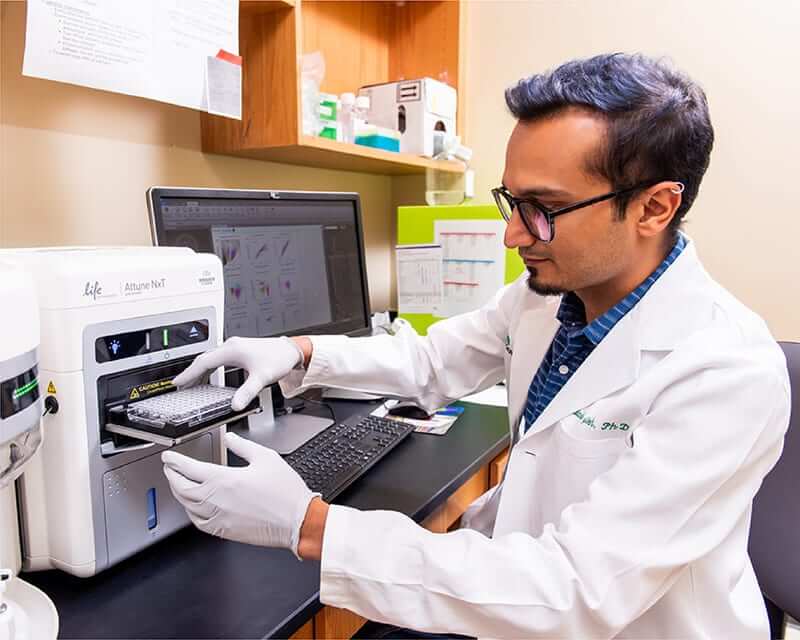 OPE's Certificate in Postdoctoral Professional Development supports postdocs who are interested in enhancing their professional development. The goal of the certificate is to prepare you to be competitive for professional opportunities after the completion of your training at UAB.
The certificate includes 15 credit hours of courses (9 required/core + 6 electives). They address six core competencies described by the National Postdoctoral Association (NPA):
- leadership and management skills,
- responsible conduct of research,
- communication skills,
- professionalism,
- discipline-specific conceptual knowledge, and
- research skill development.
The certificate is intentionally flexible in order to reinforce competencies through the core curriculum, while also allowing you to determine how you would like to invest in other competences through electives. See required and elective courses in the UAB Course Catalog opens a new website.
If you have questions about the certificate and/or would like to register, please contact OPE at
 Each year, the UAB Office of Postdoctoral Education sponsors courses in lab management, translational science, grant writing, and job skills. The job skills and grant writing courses are also open to senior graduate students at UAB.
You can see a full list of available courses and when they will be offered on UAB's class schedule listing opens a new website.
Courses
Grant Writing Course for Postdoctoral Scholars
This course introduces postdoctoral scholars to every aspect of grant writing, including selecting funding mechanisms, writing individual grant sections, and understanding administrative policies. In addition, it provides participants with the opportunity to write a grant and have it reviewed through a mock-study section with faculty who evaluate trainee applications for the NIH.
Principles of Scientific Integrity
Topics covered in GRD 717 include:
- the nature, extent, and causes of fraud in science;
- UAB policies on fraud;
- ideals of good science;
- the responsibilities of authorship and peer review;
- potential problems raised by the commercialization of research;
- scientists as public policy advisors; and
- ethical issues involved in animal experimentation and in clinical trials.
Lab Management Course for Postdoctoral Scholars
GRD 773 introduces postdoctoral students to every aspect of laboratory management, including hiring staff, managing start-up budgets, practicing safe laboratory practices, and time management.
EXPERIENCES Program
Workforce reports show that pre- and postdoctoral trainees need to be informed and educated about careers within and outside traditional academic research to be job-ready in today’s economy.
CCTS Research Training Program
This program provides academic training in the principles required to excel in today's dynamic clinical research environment. This program provides research staff (study coordinators, billing staff, regulatory coordinators, etc.) with the basics of implementing and managing a clinical study or trial with an emphasis on good clinical practices, research compliance, and other key topics.
Apply Now
To take credit bearing courses as a postdoctoral scholar, you must register as a non-degree seeking student. Learn more about registering for classes.
 UAB has a strong and ongoing commitment to the responsible conduct of research (RCR). The campus offers many opportunities for initial and annual training including formal courses through
- the Graduate School
- the Office of Postdoctoral Education (OPE), and
- through programs and training sponsored on a regular, ongoing basis by the Institutional Review Board (IRB), Conflict of Interest Review Board (CIRB), Institutional Animal Care and Use Committee (IACUC), Occupational Health and Safety (OHS), and the UAB Center for Clinical and Translational Science (CCTS).
All entering biomedical sciences trainees are educated during orientation about requirements to complete human subjects and animal use and care training programs. Completion of requisite training is arranged and documented by their specific graduate programs.
All trainees are required to participate in and satisfactorily complete Principles of Scientific Integrity (GRD 717) within the first year of training. Yearly refresher RCR activities are required, including additional ethics courses and/or utilizing Institutional resources such as training videos developed by the UAB Center for Ethics and Values in Sciences.
All mentors are advised and encouraged to include and document discussions regarding RCR during their one-on-one interactions with their students, mentor/student meetings, lab meetings, discussions of authorship on papers, how to handle various types of data, etc. As an example, when manuscripts are written, authorship and peer review are discussed. These recommendations will be disseminated to all training faculty by email on an annual basis at the time trainee applications are solicited.
Finally, we note that UAB is one of eight institutions recently awarded funding by the Council of Graduate Schools and the Office of Research Integrity to develop strategies to integrate RCR educational materials into the graduate curriculum, for use by faculty and graduate students in discussion of scholarly integrity. UAB’s national and international leadership in the area of ethics training was reflected by presentations at the 2010 Project for Scholarly Integrity Capstone Conference and the 2012 ORI conference “Quest for Research Excellence” and were highlighted in Research and Scholarly Integrity in Graduate Education: A Comprehensive Approach, published in 2012 by the Council of Graduate Schools.
Principles of Scientific Integrity
Format
The Principles of Scientific Ethics course (GRD 717; 3 credit hours) includes a blended approach of on-line training and in-person discussion on topics related to the responsible conduct of research (RCR).
Specifically, the on-line training component includes completion of all RCR-related CITI Program modules. Participants are required to successfully complete each of these modules, achieving a score of 80% or better. Once completed, participants then attend an in-person discussion session that consists of an all-day (8 hours) Saturday workshop facilitated by training program directors, preceptors, and administrators. Three Saturday sessions are offered so that participants and facilitators can select a date that best fits their schedules. These sessions debate case-studies in a team-based learning format. They also allow for additional RCR-related activities, such as panel discussions with faculty and administrators regarding real-world RCR examples and role-playing RCR scenarios.
Subject Matter
Topics covered in GRD 717 include:
- the nature, extent, and causes of fraud in science;
- UAB policies on fraud;
- ideals of good science;
- the responsibilities of authorship and peer review;
- potential problems raised by the commercialization of research;
- scientists as public policy advisors; and
- ethical issues involved in animal experimentation and in clinical trials.
Among the areas previously discussed are:
- Ethical Decision Making
- UAB Policies on Research Misconduct
- Protection of Human Subjects in Research
- Welfare of Laboratory Animals
- Best Practices for Data Management
- Identifying and Managing Conflicts of Interest
- Ethical Authorship and Avoiding Plagiarism
- Best Practices in Collaborative Research
- Mentor and Trainee Responsibilities
- Expectations of the Peer Review Process
Faculty Participation
GRD 717 is led by Lisa Curtis, Ph.D., Associate Dean for Research and Training in the Graduate School, using a team-based learning approach. She is assisted by faculty facilitators. These facilitators lead discussions with graduate students and postdoctoral scholars in the responsible conduct of research.
How to Register
You will need to apply to the Graduate School as a non-degree seeking student. Instructions can be found on Registering for Classes. Permission is not needed to take this course. Once you have been accepted to the Graduate School, you may register through Blazernet. If you have issues registering, please
Important!
Please note that CITI Program modules for IRB and Good Clinical Practice are NOT sufficient to satisfy the course requirement.
 All postdoctoral scholars receive tuition assistance to take credit-bearing courses here at UAB. The amount of tuition assistance one receives depends on their appointment type. Scholars commonly take courses in:
- teaching
- leadership
- statistics
- bioinformatics
- public health
- biomedical sciences
- business
All postdoctoral scholars must take UAB’s Responsible Conduct of Research (RCR) course, GRD 717: Principles of Scientific Integrity during their first year of training.
Please note that if you are a postdoctoral trainee receiving six credit hours from OPE, the office will not pay for undergraduate courses. UAB's Educational Assistance Program will pay undergraduate tuition for postdoctoral employees.
To take credit bearing courses as a postdoctoral scholar, you must first apply to the Graduate School as a non-degree seeking student. Instructions on how to apply as a non-degree seeking student can be found in Section A of the Postdoctoral Scholars Handbook's appendix. Please follow these instructions exactly as they will allow you to bypass the application fee. After you are accepted into the Graduate School, you will register for classes via BlazerNet. Instructions on how to register via BlazerNet can also be found in the handbook. During the IDP workshop, OPE will go into more detail about this process.
To receive tuition benefits (consistent with UAB policy for the Educational Assistance Program) you must:
- have at least a 3.0 graduate grade point average on any prior graduate course work taken at UAB
- maintain an overall UAB graduate grade point average of 3.0 or better. If you fail to maintain the appropriate grade point average, you will not be eligible for the tuition benefit.
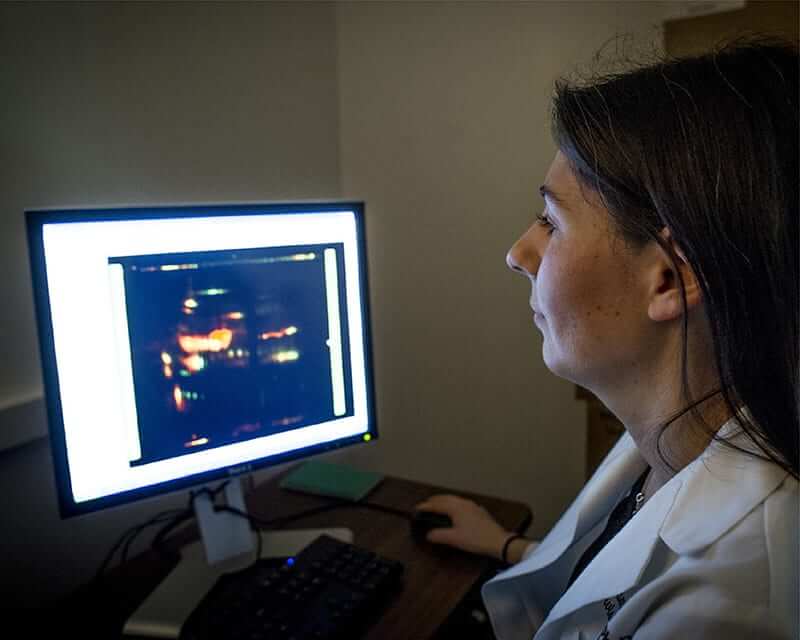
All postdoctoral scholars – trainees (20) and employees (21) – receive tuition assistance to complete coursework at UAB. The type of tuition assistance they receive is aligned with the postdoctoral scholar’s appointment type.
Postdoctoral Trainees (20)
Postdoctoral trainees receive, in addition to any tuition benefits provided through their training or fellowship grants, six free credit hours of tuition each academic year (August-July) through OPE.
Postdoctoral Employees (21)
Postdoctoral employees, after working as a postdoc for six months at UAB, receive, through the university, educational assistance for themselves and their families. For the postdoctoral employee, this includes 100% in-state tuition assistance for undergraduate, graduate, and professional program courses at UAB. For their children and spouses, they receive 50% in-state tuition assistance for undergraduate credit courses at UAB. Note that the scholar will have to pay taxes on any tuition assistance for graduate courses over $5,250 given during one calendar year (January-December). These taxes will be deducted from your payroll.
For more information on educational assistance through the university, see UAB’s Educational Assistance Policy and Financial Affair’s website.
Responsible Conduct of Research
Please note that all postdoctoral scholars must take UAB’s Responsible Conduct of Research (RCR) course, GRD 717: Principles of Scientific Integrity during their first year of training regardless if they took it as a doctoral student. This class fulfills UAB’s Office of Research requirement on research ethics as well as the mandates for RCR by the National Institutes of Health and National Science Foundation.
Should you have inquiries regarding your tuition benefit, please contact our office.
 Benefits to postdoctoral scholars vary according to the type of appointment. Due to IRS restrictions placed on non-taxed fellowships, retirement benefits are not allowed for postdoc trainees (Status Code 20). VIVA Health Insurance coverage is provided at no cost to the postdoc with the option of purchasing the dental and vision portion of the insurance plan.
Postdoc employees (Status Code 21), because of their employee-employer relationship with the university, receive a salary. VIVA Health Insurance is available for purchase for UAB postdocs with the additional option of purchasing the dental and vision portion of the insurance plan.
Learn More about Types of Postdoctoral Appointments
-
Compensation & Taxes
Compensation & Taxes
Salaries
All mentors at the University of Alabama at Birmingham are strongly encouraged to follow the National Institutes of Health, National Research Service Award (NRSA) stipend level guidelines.
As of January 1, 2024 the UAB Graduate School in conjunction with the Office of Postdoctoral Education requires a minimum starting stipend of at UAB is $56,400.00 plus benefits.
UAB is committed to ensuring compliance with sponsor and university requirements while providing effective stewardship of resources. In support of this commitment, it is important to remember that external support of research activities (including salary, supplies, stipends, etc.) must be processed through the UAB Office of Sponsored Programs. This helps ensure transparency and facilitates compliance with UAB’s regulatory and other responsibilities by allowing for institutional reviews (e.g., COI, export control).
Taxes
UAB withholds taxes (federal, state, FICA) from the wages of Postdoctoral Employees (status 21). Postdoctoral Fellows (status 20) do not have taxes withheld from stipends as stipends are not considered taxable income, but they are responsible for paying taxes. These estimated taxes are typically paid quarterly. Due to the intricacies of individual tax situations, please familiarize yourself with federal opens a new website and state opens a new website tax information. International trainees should consult the International Student and Scholar Services opens a new website office for further information on their tax circumstances. -
Benefit Eligibility Table
Benefit Eligibility Table
Accidental Death and Dismemberment Insurance
Employment Category
Status Code
UAB paid Accidental Death and Dismemberment Insurance
Employee paid Accidental Death and Dismemberment Insurance
Postdoctoral Scholar Trainee
20
Yes
Yes*
Postdoctoral Scholar Employee
21
Yes
Yes*
Other Benefits
Employment Category
Status Code
TIAA-CREF Retirement
Viva Health Insurance
Dental and Vision Insurance
UAB paid Group Term Life Insurance
Postdoctoral Scholar Trainee
20
No
Yes
Yes*
Yes
Postdoctoral Scholar Employee
21
Yes, 403(b) Plan matched up to 5% of salary
Yes**
Yes*
Yes
*Individual pays premium.
**Individual pays premium effective December 1, 2016.
-
University Benefits
University Benefits
- Viva Health Insurance: VIVA Health is the health care plan for Postdoctoral Trainees (status code 20) and Postdoctoral Employees (status code 21). Coverage under UAB's group health care plan must be elected on either the first day of appointment or the first day of the month following the date of appointment. The postdoc has 31 days from their starting date to complete hospital insurance forms either by participating in UAB New Hire Orientation or by scheduling an appointment with the UAB Employee Benefits. Some form of health insurance coverage is mandatory and proof of insurance is required if the University's health insurance is not elected. VIVA Health also covers medical evacuation and repatriation of remains for international postdoctoral scholars.
- Group Term Life Insurance: Varies with salary. Provided at no cost to the employee. (Sponsored)
- Accidental Death and Dismemberment Insurance: $22,500.00 for accidental death; dismemberment coverage varies. Provided at no cost to the employee. (Sponsored)
- Long Term Disability Insurance (Salary Continuation): After a 90-day waiting period, 66 2/3% monthly salary (not to exceed $10,000 per month) for the first 90 days of benefits. After 90 days of continued benefits, plan pays 60% monthly salary (not to exceed $10,000 per month). Proved at no cost to the employee. (Sponsored)
- Voluntary Retirement Plans
- 403(b) Plan: The 403(b) plan is a voluntary, defined-contribution, tax-deferred as well as Roth after-tax plan governed by the Internal Revenue Code 403(b). Eligible employees can choose between both TIAA/CREF and VALIC for investments. Vesting in the 403(b) plan is immediate. The University matches the individual’s contributions up to 5% of gross monthly pay not to exceed the IRS 401(a) annual compensation limit.
- 457(b) Plan: UAB also offers a voluntary, defined-contribution, tax deferred as well as Roth after-tax plan governed by Internal Revenue Code 457(b). Similar to the 403(b) plan, the 457(b) plan offers the same expanded investment options, convenient payroll deductions, pre-tax contributions, and tax-deferred growth through both TIAA-CREF and VALIC. There are no University matching contributions under this plan.
-
Voluntary Employee-Paid Benefits
Voluntary Employee-Paid Benefits
- Postdoctoral Met Life Dental Basic Option: Preventive and diagnostic are covered at 90% UCR. Basic services are covered at 90% UCR subject to a $25.00 deductible. The postdoc will pay a monthly premium for single or family coverage.
- Postdoctoral Met Life Dental Comprehensive Option: In addition to the basic dental benefits, the comprehensive plan covers major services at 60% UCR subject to the deductible. Orthodontic services are covered at 50% of UCR up to a $1,000.00 per patient lifetime maximum. The postdoc pays the full monthly premium for single or family coverage.
- Vision Service Plan (VSP) Vision Plan: The VSP plan offers employees coverage for routine eye exams, lenses and frames, contacts, and discounts for LAKIK eye surgery. The postdoc pays the full monthly premium for single or for family coverage.
- Group Universal Life Insurance Coverage, Maximum Coverage: Up to five times your Basic Annual Earnings, not to exceed $1.4 million. Guaranteed Issue - Three (3) times salary, not to exceed $500,000.00 during first 60 days of employment without evidence of insurability. Individual pays full premium. Rates vary based on age.
- Accidental Death and Dismemberment Insurance, Maximum Coverage: Lesser of 10 times your basic annual earnings or $500,000.00. Individual pays full premium. Rates vary based on coverage level.
-
Vacation, Sick, & Maternity/Paternity Leave
Vacation, Sick, & Maternity/Paternity Leave
- Vacation Leave: Six months after the effective appointment date, all postdoctoral scholars are eligible for ten (10) paid working days per year. Vacation days do not accrue and cannot be carried over from year to year. All requests for vacation leave should be made in writing and must be approved by the direct supervisor. Postdoctoral Scholars and their supervisors are responsible for maintaining appropriate records.
- Sick Leave: 10 paid working days per year. Sick leave should not be used as vacation. Sick days do not accrue and cannot be carried over from year to year.
- Maternity/Paternity Leave: 22 paid successive working days immediately following or just prior to birth or adoption of a child. If both spouses are employed as postdoctoral scholars, each one is eligible for a consecutive term of maternity/paternity leave. Additional, non-paid leave, following the provisions of the Family Medical Leave Act, must be requested and approved by the supervisor and UAB.
-
Additional Benefits
Additional Benefits
 Welcome to UAB! You’ve joined a robust and vibrant community of scientists dedicated to advancing science and innovation. The Office of Postdoctoral Education is here for you as a hub for administrative, professional development, and wellness support.
Your postdoc is a time for training you as a researcher and supporting you in discovering and preparing for your future career. We view your training from a holistic standpoint with an emphasis on providing:
- support
- resources
- avenues for continuing education, both through courses in the UAB Graduate School and grants to attend workshops outside of UAB.
As you explore the resources below we encourage you to reach out to the members of the OPE team with questions.